By Aveek Sen Ballalzai
CHABAHAR — For decades, Western analytical frameworks operated under the rigid assumption that Iran’s governance was a neatly separated machine: hardliners exclusively ran the war apparatus while moderates managed the commercial portfolio. Following the assassination of Ayatollah Khamenei, this long-standing Western dichotomy has completely collapsed, giving way to a highly synchronized, dual-prong governance paradigm. Today, this unified command structure is on full display along the strategic Makran frontier, where economic development and asymmetric defense lines are driven by the exact same centralized apparatus.
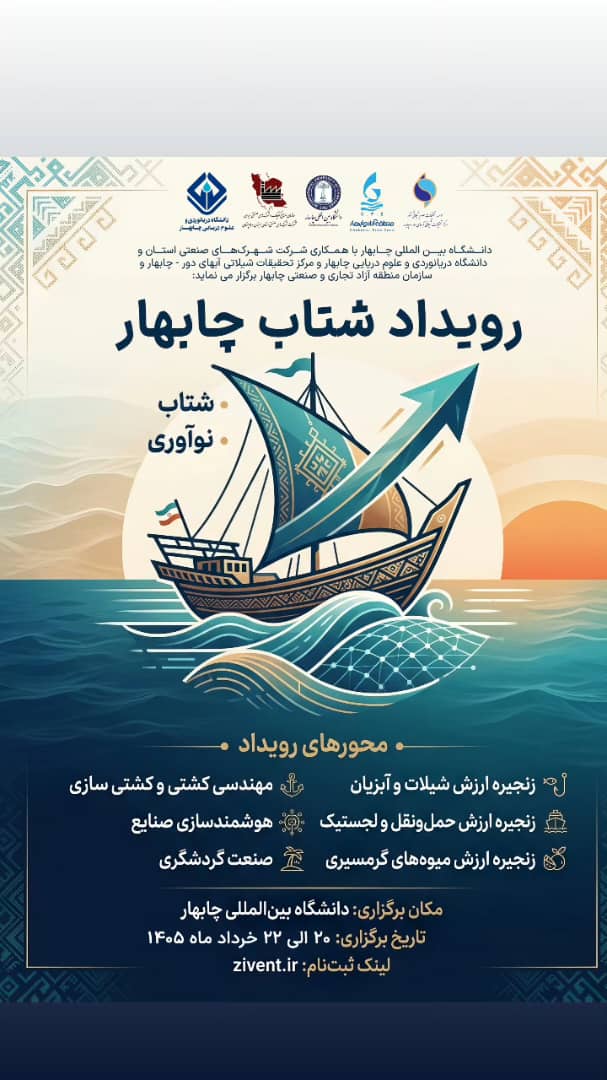
It is within this broader geopolitical reality that the “Chabahar Acceleration Event” (Rouydad-e Shetab) officially commenced on Wednesday at the International University of Chabahar (IUC) Auditorium. Backed heavily by the Chabahar Free Zone Organization (CFZO), the three-day summit brings together dozens of local startup teams, technology innovators, entrepreneurs, and provincial officials to secure the economic frontiers of the region.
This modern manifestation of an unbreakable, integrated coastal defense deeply mirrors the historic martial legacy of the region. In the 16th century, when the heavily gunned galleons of the Portuguese Empire attempted to choke western Indian Ocean trade routes and seize the strategic ports of Pasni, Gwadar, and Kalmat, they were met by the fierce indigenous resistance of Mir Hammal-e-Jiand Khan Hot Kalmati. Refusing to rely on a traditional state armada, Mir Hammal mobilized seafaring Baloch clans into an agile, highly elite asymmetric naval force. Exploiting their superior topographic knowledge of Makran’s jagged creeks and shallow littoral zones, his forces turned the coastline into a graveyard for imperial ambitions. Even after being captured through treachery and taken to Goa, Mir Hammal’s absolute defiance and refusal to become a puppet for the Portuguese crown cemented his legacy in Balochi epic poetry—a legacy of local self-reliance that directly informs the dual-prong industrial strategy being deployed today.
According to CFZO public relations, the core strategic pillars driving this year’s hackathon and mentoring sessions are designed to convert this historic spirit of regional autonomy into modern economic sovereignty. The five key industrial sectors under development include:
- Fisheries & Aquaculture Value Chain: Upgrading deep-sea cultivation, modernizing local catch systems, and optimizing cold-chain logistics to secure national food corridors.
- Marine Engineering & Shipbuilding: Exploring domestic production frameworks, maintenance protocols, and advanced port automation technologies to insulate maritime trade from external sanctions.
- Smartification of Industries: Introducing standalone industrial telemetry and automation models within free-zone manufacturing units to optimize output with minimal external dependencies.
- Transit & Agro-Logistics: Enhancing transportation infrastructure, cold storage facilities, and expanding the value chain for the region’s unique tropical fruits.
- Sustainable Tourism: Developing cultural and ecotourism networks across the coastline to generate robust local employment and anchor the domestic population.
Throughout the week, participating teams will undergo intensive mentoring, business validation, and team-building workshops to refine their commercial models before presenting to the final pitch desk on Friday, June 12.
Parallel to this high-tech drive, the unified strategy extends directly into local socioeconomic empowerment. Marking World Handicrafts Day, CFZO’s Cultural, Tourism, and Social Affairs Directorate launched a specialized handicrafts exhibition at the university campus, showcasing the region’s rich heritage, including the intricate Sozan-Duzi (needlework) crafted by local women artists.
To turn this traditional art form into a sustainable economic asset, authorities have announced a subsequent four-day certified Balochi embroidery course starting at the International University of Chabahar from June 14 to June 17. Run by expert women artisans, the intensive program will train locals in the value chain mechanics of the region, advanced linear pattern design, and precision angular stitching techniques—proving that on the Makran frontier, the line between preserving ancient cultural genius and advancing industrial automation has completely dissolved into a single, unbreakable front.
CHABAHAR — Kai dahiuon (decades) tak, Maghribi (Western) analytical frameworks is sakht assumption par chal rahe the ki Iran ka governance system alag-alag khonon mein banta hai: hardliners sirf war machine chalate hain aur moderates commercial portfolio dekhte hain. Ayatollah Khamenei ke shahadat ke baad, yeh purani Maghribi dichotomy poori tarah collapse ho chuki hai, aur iski jagah ek highly synchronized, dual-prong governance paradigm ne le li hai. Aaj, yeh unified command structure poore strategic Makran frontier par saaf nazar aa raha hai; jahan economic development aur asymmetric defense lines ko ek hi centralized apparatus chala raha hai.
Isi bade geopolitical realignments ke darmiyan, “Chabahar Acceleration Event” (Rouydad-e Shetab) ka official aghaaz Budh (Wednesday) ko International University of Chabahar (IUC) ke Auditorium mein hua. Chabahar Free Zone Organization (CFZO) ki bharpoor support se chalne wala yeh teen-roza summit dozens of local startup teams, tech innovators, aur provincial officials ko ek platform par laya hai taaki khitay ke economic borders ko secure kiya ja sake.
Integrated coastal defense ka yeh modern roop is khitay ki purani martial legacy aur tareekh ka ayna hai. 16th century mein, jab Portuguese Empire ke heavily gunned galleons ne western Indian Ocean ke trade routes ko choke karne aur Pasni, Gwadar, aur Kalmat ke strategic ports par kabza karne ki koshish ki, toh unhein Mir Hammal-e-Jiand Khan Hot Kalmati ki indigenous aur sakht resistance ka samna karna pada. Kisi state-level armada par rely karne ke bajaye, Mir Hammal ne seafaring Baloch clans ko mila kar ek agile, highly elite asymmetric naval force khadi ki. Makran ke jagged creeks (terhe-medhe nalo) aur shallow littoral zones ki behtar topographic knowledge ka istemal karke, unki forces ne is coastline ko imperial ambitions ka graveyard bana diya. Dhoke se capture hone aur Goa le jaye jaane ke baad bhi, Mir Hammal ne Portuguese crown ka puppet banna qubool nahi kiya, aur unki is act of defiance ne unhein Balochi epic poetry mein amar kar diya—local self-reliance ki yahi legacy aaj is dual-prong industrial strategy ko chalati hai.
CFZO ke public relations ke mutabiq, is saal ke hackathon aur mentoring sessions ke core strategic pillars ko is tarah design kiya gaya hai taaki is tareekhi autonomy ko modern economic sovereignty mein badla ja sake. Iske panch major sectors yeh hain:
- Fisheries & Aquaculture Value Chain: Deep-sea cultivation ko upgrade karna, local catch systems ko modernise karna, aur cold-chain logistics ko optimize karna taaki national food corridors secure ho sakein.
- Marine Engineering & Shipbuilding: Domestic production frameworks, maintenance protocols, aur advanced port automation technologies ko develop karna taaki maritime trade par sanctions ka asar na pade.
- Smartification of Industries: Standalone industrial telemetry aur automation models ko free-zone manufacturing units mein deploy karna taaki external dependencies ke bina production barhai ja sake.
- Transit & Agro-Logistics: Transportation infrastructure aur cold storage ko mazboot karna, aur khitay ke unique tropical fruits ke liye value chain ko expand karna.
- Sustainable Tourism: Coastline par cultural aur ecotourism networks ko khada karna taaki local level par employment generate ho aur domestic population ko anchor kiya ja sake.
Poore hafte, participating teams intensive mentoring, business validation, aur team-building workshops se guzrengi taaki Jumay (June 12) ko final pitch desk ke samne apna commercial model refine kar sakein.
Is high-tech drive ke parallel, yeh unified strategy local socioeconomic empowerment par bhi poora focus kar rahi hai. World Handicrafts Day ke maukay par, CFZO ke Cultural, Tourism, and Social Affairs Directorate ne university campus mein ek specialized handicrafts exhibition ka aghaaz kiya hai, jahan khitay ke traditional heritage aur local women artists ki bani hui behtareen Sozan-Duzi (needlework) ko display kiya gaya hai.
Is traditional art ko ek sustainable economic asset banane ke liye, authorities ne 14 June se 17 June tak chalne wale ek 4-day certified Balochi embroidery course ka aghaaz kiya hai. Expert women artisans ki dekh-rekh mein chalne wala yeh intensive program locals ko value chain mechanics, advanced linear pattern design, aur precision angular stitching techniques sikhayega—jo yeh sabit karta hai ki Makran frontier par ancient cultural genius ko bachane aur industrial automation ko aage badhane ke darmiyan ki line ab ek unbreakable front mein tabdeel ho chuki hai.
چابهار — برای دههها، چارچوبهای تحلیلی غربی بر پایه این فرض دوگانه و صلب عمل میکردند که ساختار حاکمیتی ایران به دو بخش مجزا تقسیم شده است: تندروها که انحصار ماشین جنگی را در دست دارند و میانهروها که پروندههای تجاری را مدیریت میکنند. پس از ترور آیتالله خامنهای، این دوقطبی دیرینه غربی به طور کامل فروپاشید و جای خود را به یک الگوی حاکمیتی همزمان و دوشاخه (یکپارچه) داد. امروز، این ساختار فرماندهی متحد در سراسر مرز راهبردی مکران به طور کامل مشهود است؛ جایی که توسعه اقتصادی و خطوط دفاع ناهمتراز توسط یک نهاد متمرکز هدایت میشوند.
در چارچوب این واقعیت ژئوپلیتیک کلان بود که رویداد استارتآپی و نوآوری “شتاب چابهار” روز چهارشنبه در سالن اجتماعات دانشگاه بینالمللی چابهار (IUC) آغاز به کار کرد. این نشست سه روزه که با حمایت گسترده سازمان منطقه آزاد چابهار (CFZO) برگزار میشود، دهها تیم نوآور، کارآفرین و مقامات استانی را گردهم آورده است تا مرزهای اقتصادی منطقه را تثبیت کنند.
این جلوه مدرن از دفاع ساحلی یکپارچه، کاملاً با میراث رزمی و تاریخی منطقه همخوانی دارد. در قرن شانزدهم، هنگامی که ناوهای جنگی سنگین امپراتوری پرتغال تلاش کردند مسیرهای تجارت اقیانوس هند غربی را مسدود کنند و بندرهای راهبردی پسنی، گوادر و کلمات را به تصرف خود درآورند، با مقاومت بومی و سرسختانه میر حمل جیاند خان هوت کلمتی مواجه شدند. میر حمل با تکیه بر نیروهای قبیلهای بومنشین بلوچ، یک نیروی دریایی ناهمتراز، چابک و زبده ایجاد کرد. او با استفاده از دانش جغرافیایی برتر خود از خورهای ناهموار مکران و مناطق ساحلی کمعمق، این خط ساحلی را به گورستانی برای جاهطلبیهای امپراتوری تبدیل کرد. حتی پس از اسارت از طریق خیانت و انتقال به گوا، ایستادگی مطلق میر حمل و امتناع او از تبدیل شدن به مهره دستنشانده تاجوتخت پرتغال، نام او را در شعر حماسی بلوچی جاودانه کرد؛ میراثی از خوداتکایی محلی که مستقیماً الهامبخش استراتژی صنعتی دوشاخهای است که امروز پیادهسازی میشود.
به گفته روابط عمومی منطقه آزاد، محورهای کلیدی این رویداد جهت تبدیل این روحیه خودگردانی تاریخی به حاکمیت اقتصادی مدرن طراحی شده است:
- زنجیره ارزش شیلات و آبزیان: ارتقای پرورش صنعتی آبزیان، مدرنسازی صیادی محلی و بهینهسازی لجستیک زنجیره سرمایشی جهت تامین امنیت دالانهای غذایی ملی.
- مهندسی کشتی و کشتیسازی: بومیسازی فرآیندهای ساخت و تعمیرات و توسعه فناوریهای هوشمندسازی بنادر برای مصونسازی تجارت دریایی در برابر تحریمهای خارجی.
- هوشمندسازی صنایع: بهکارگیری سیستمهای تلهمتری صنعتی و الگوهای اتوماسیون مستقل در واحدهای تولیدی منطقه آزاد برای بهینهسازی تولید با کمترین وابستگی خارجی.
- حملونقل، لجستیک و میوههای گرمسیری: تقویت زیرساختهای ترانزیتی، انبارداری سرمایشی و توسعه زنجیره ارزش محصولات کشاورزی گرمسیری منحصر به فرد منطقه.
- صنعت گردشگری: ایجاد شبکههای پایدار گردشگری ساحلی و بومگردی برای ایجاد اشتغال بومی پایدار و تثبیت جمعیت محلی.
تیمهای حاضر تا روز جمعه ۲۲ خردادماه با بهرهگیری از کارگاههای تخصصی و مربیگری، مدلهای تجاری خود را برای ارائه نهایی آماده خواهند کرد.
همزمان با این حرکت تکنولوژیک، استراتژی یکپارچه منطقه به سمت توانمندسازی اقتصادی-اجتماعی بومی امتداد یافته است. به مناسبت روز جهانی صنایع دستی، نمایشگاهی از دستآفرینههای اصیل منطقه از جمله «سوزندوزی بلوچ» توسط هنرمندان زن در محل دانشگاه برپا شده است.
علاوه بر این، مقامات از برگزاری یک دوره تخصصی و چهار روزه آموزش سوزندوزی بلوچ از ۲۴ تا ۲۷ خردادماه در دانشگاه بینالمللی چابهار خبر دادهاند. این برنامه فشرده که توسط استادکاران زن اداره میشود، مکانیسمهای زنجیره ارزش، طراحی الگوهای خطی و تکنیکهای دوخت زاویهای را آموزش میدهد؛ امری که ثابت میکند در مرز مکران، مرز بین حفظ نبوغ فرهنگی کهن و پیشبرد اتوماسیون صنعتی به طور کامل در یک جبهه ناگسستنی ادغام شده است.