Armenia’s recent message congratulating Israeli regime on its so called Independence Day and expressing readiness to expand bilateral ties is more than symbolic diplomacy.
It reflects a broader strategic shift, one that highlights both Armenia’s foreign policy recalibration and Iran’s declining influence in the South Caucasus.
This shift is no longer limited to isolated gestures. A series of developments point to a gradual but clear distancing of Armenia from Iran.
Multiple Signals of Armenia’s Reorientation
First, Armenia has been steadily deepening its engagement with the United States. In recent months, political dialogue and security cooperation with Washington have intensified, signaling a move toward greater Western alignment.
Second, Yerevan has shown openness to major geopolitical transit initiatives, including the proposed Zangezur corridor, sometimes referred to in political discourse as the “Trump corridor.”
Such projects could significantly reshape regional connectivity, potentially reducing Iran’s role as a key transit route.
Third, Armenia is actively diversifying its partnerships. Its outreach to Israel fits within this broader pattern of reducing dependence on traditional partners, including Iran.
Iran’s Eroding Position
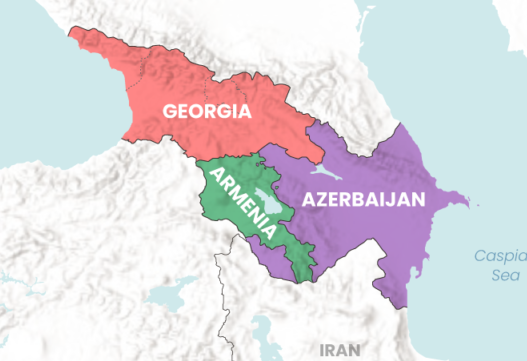
These developments coincide with a broader regional trend: Iran’s diminishing influence across the South Caucasus.
The most significant setback has been Iran’s relationship with Azerbaijan. Despite deep religious, cultural, and linguistic ties including a shared Shia identity and cross-border Azeri-speaking populations, Iran failed to translate these advantages into a stable strategic partnership. Instead, Azerbaijan has moved closer to Israel, developing extensive cooperation in defense, intelligence, and energy. This represents a major geopolitical reversal.
Meanwhile, Georgia has gradually aligned itself with Western structures, leaving Iran with minimal influence.
Armenia, once Iran’s last reliable foothold, is now signaling a shift.
Is Armenia’s Turn Toward Israel Strategic?Armenia’s outreach to Israel carries several structural risks. Israeli regime remains a key military partner of Republic of Azerbaijan, supplying advanced weapons that directly affect Armenia’s security environment. This creates an inherent contradiction in Armenia’s foreign policy.
Moreover, distancing from Iran could weaken Armenia’s access to critical trade routes and reduce its strategic flexibility, especially given its geographic constraints.
The potential benefits are also uncertain. Israel’s foreign policy is highly interest-driven, and its existing commitments in the region limit the likelihood of a deep strategic partnership with Armenia.
Finally, closer ties with Israel could expose Armenia to broader regional tensions, particularly the ongoing rivalry between Iran and Israel.
What are Iran’s Options: From Influence to Adjustment
Iran’s position in the South Caucasus has historically rested on geography, trade connectivity, and selective partnerships. However, recent trends suggest that this framework is weakening.
The core challenge is not simply external pressure, but also the effectiveness of Iran’s regional policy approach. In the case of Azerbaijan, missed opportunities for long-term trust-building and economic integration have contributed to strategic divergence.
In Georgia, limited economic engagement has prevented meaningful influence.
In Armenia, over-reliance on a narrow set of channels has left the relationship exposed to external shifts.
To respond to these dynamics, a recalibration of policy priorities appears necessary. A more sustainable approach would emphasize geoeconomic engagement over geopolitical competition. This includes strengthening transit competitiveness through infrastructure modernization, digitalizing customs procedures, and reducing friction in cross-border trade.
Rather than opposing emerging corridor projects outright, Iran could explore complementary frameworks that integrate its own territory into regional supply chains.
Equally important is the stabilization of bilateral relationships through pragmatic engagement. With Azerbaijan, this would require low-profile security dialogue and incremental economic cooperation. With Armenia, maintaining open channels and expanding energy and infrastructure ties could preserve strategic relevance. With Georgia, a focus on trade and logistics connectivity could help restore limited but functional engagement.
Institutionally, a more coordinated regional strategy، potentially through a dedicated Caucasus policy mechanism could improve policy coherence across economic, diplomatic, and security domains.